
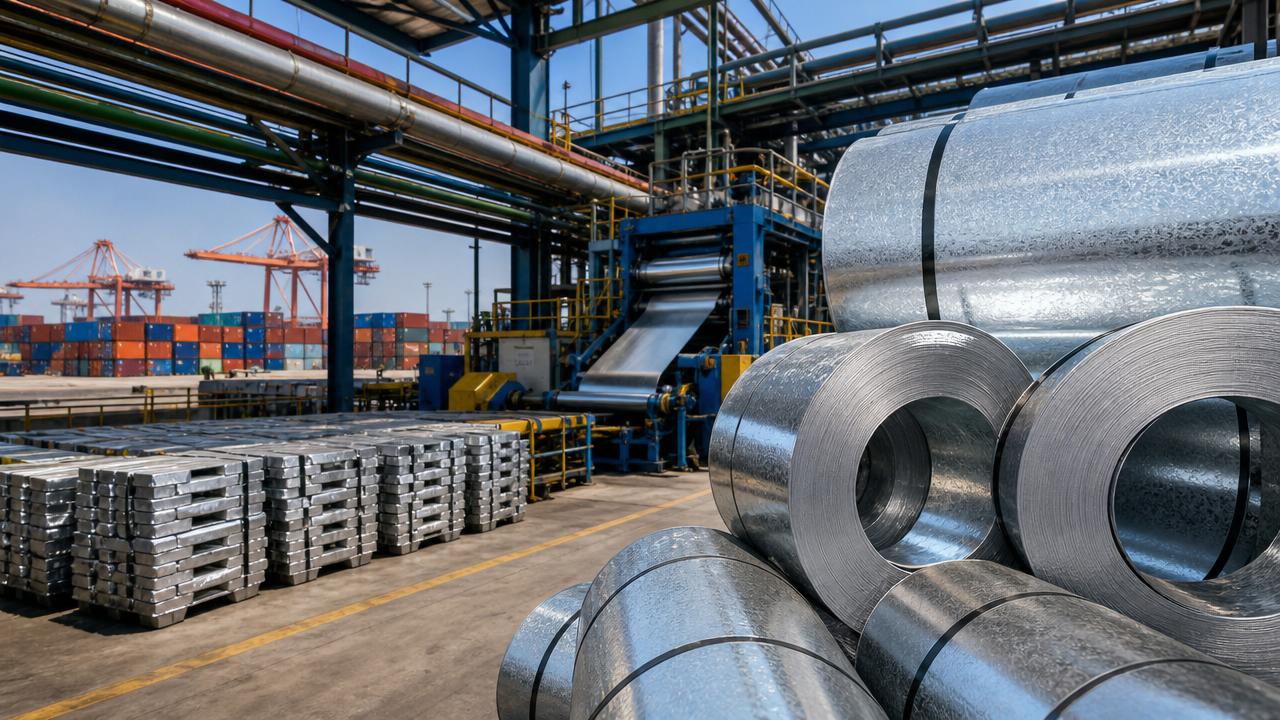
Galvanized Steel Coil Price Drivers in 2026: What Is Changing?
As global supply chains adjust to shifting energy costs, trade policies, and construction demand, understanding galvanized steel coil price drivers in 2026 is essential for stable sourcing and cost control.
For companies comparing suppliers across international markets, price is no longer shaped by zinc and steel alone.
It also reflects logistics, currency trends, production capacity, coating standards, and supplier reliability.
This article answers key questions about galvanized steel coil pricing and supports more informed, forward-looking sourcing decisions.
What Makes Galvanized Steel Coil Prices Move in 2026?
The price of galvanized steel coil is built from several linked cost layers.
The first layer is the base steel substrate, usually cold rolled or hot rolled steel.
The second layer is zinc, which protects the steel from corrosion through a metallic coating.
The third layer includes processing, energy, packaging, financing, transport, and export documentation.
In 2026, these layers may become more volatile because input costs are moving at different speeds.
- Iron ore and coking coal affect the steel substrate.
- Zinc prices affect coating cost and corrosion protection value.
- Natural gas and electricity influence galvanizing line costs.
- Freight rates change landed cost in export markets.
- Exchange rates affect final contract competitiveness.
A low quoted galvanized steel coil price may not always mean lower total cost.
Coating weight, surface quality, tolerance control, and delivery certainty must be reviewed together.
How Will Zinc and Raw Steel Costs Influence Galvanized Steel Coil?
Zinc is one of the most visible drivers of galvanized steel coil pricing.
When zinc supply tightens, coating-heavy products usually feel stronger price pressure.
Common coating designations such as Z80, Z120, Z180, and Z275 create different zinc consumption levels.
A higher zinc coating can improve corrosion resistance, especially in outdoor or humid environments.
However, it also increases material cost and may widen the price gap between specifications.
Base steel is equally important because it represents a large share of the coil cost.
If hot rolled coil prices rise, galvanized steel coil usually follows after a short lag.
Cold rolled substrate changes can also influence thinner gauge galvanized products used in panels and appliances.
What should be checked before comparing quotes?
- Steel grade, such as DX51D, SGCC, or ASTM A653 grade.
- Thickness tolerance and width tolerance.
- Zinc coating mass on both sides.
- Spangle type, passivation, oiling, or anti-fingerprint treatment.
- Coil weight, inner diameter, and export packing method.
Without these details, galvanized steel coil prices may look comparable but represent very different products.
Why Do Energy, Capacity, and Environmental Rules Matter?
Galvanizing is an energy-intensive process that requires controlled heating, cleaning, annealing, and zinc bath operation.
When electricity or gas costs rise, mills may adjust offers to protect production margins.
Capacity utilization also matters because steel mills price differently during tight and loose supply cycles.
If construction, roofing, ducting, and light steel framing demand recover together, galvanized steel coil supply may tighten.
If demand weakens, mills may offer more flexible prices to maintain production flow.
Environmental rules can add another cost layer in 2026.
Emission controls, wastewater treatment, and cleaner production upgrades may increase compliance costs for certain facilities.
At the same time, more efficient lines may gain pricing advantages through lower unit energy consumption.
Which production signals are useful?
- Mill maintenance schedules that reduce short-term availability.
- Regional operating rates for coated steel lines.
- Lead times for standard and customized specifications.
- Inventory levels at mills, traders, and ports.
These signals often explain why galvanized steel coil prices change before raw material indexes fully move.
How Do Trade Policy and Logistics Affect Landed Cost?
International galvanized steel coil transactions depend heavily on trade rules and shipping conditions.
Tariffs, anti-dumping measures, quotas, certification requirements, and sanctions can reshape sourcing routes quickly.
Even when ex-works prices stay stable, landed cost can change because freight and insurance move.
Port congestion, container shortages, fuel surcharges, and geopolitical risks may widen delivery cost differences.
Currency fluctuations are another common reason for price changes in export steel trade.
A stronger supplier currency may raise offer prices, while a weaker currency may support competitiveness.
For galvanized steel coil, payment terms should also be considered when comparing quotations.
A lower price with risky payment conditions may be less attractive than a transparent and balanced contract.
What should a landed cost calculation include?
Which Applications Are Most Sensitive to Price Changes?
Galvanized steel coil is widely used because it balances formability, corrosion resistance, and cost efficiency.
Price sensitivity varies by application, coating requirement, and replacement difficulty.
Construction applications often react quickly because roofing, wall panels, purlins, and decking consume large volumes.
HVAC ducting may require consistent thickness, smooth surface, and predictable forming performance.
Home appliance parts may focus more on surface appearance, flatness, and coating uniformity.
Agricultural facilities may require heavier zinc coating because moisture and chemicals accelerate corrosion.
How can specification choices control cost?
The best galvanized steel coil specification is not always the highest coating or tightest tolerance.
It should match the real service environment, forming process, expected lifespan, and maintenance plan.
- Use heavier coating for outdoor exposure and long service life.
- Use standard coating for dry indoor components.
- Control thickness tolerance for roll forming stability.
- Choose surface treatment according to storage conditions.
Over-specification can raise cost unnecessarily.
Under-specification can create corrosion claims, processing waste, and replacement expenses.
How Should Supplier Reliability Be Evaluated in 2026?
Supplier reliability is a major hidden factor behind galvanized steel coil price performance.
A stable supplier helps reduce uncertainty in quality, lead time, documentation, and communication.
Price stability is stronger when supply channels are diversified and mill relationships are mature.
Liaocheng Jinchang Xincheng Trading Co., Ltd. focuses on carbon steel and stainless steel products for global markets.
With industry experience, a professional team, and a stable supply chain, the company supports consistent steel sourcing.
Its market development includes international regions such as Russia, where reliability and documentation are especially important.
What questions help identify a dependable source?
- Can the supplier provide mill test certificates?
- Are coating weight and thickness records traceable?
- Is export packing suitable for long-distance transport?
- Can delivery schedules be confirmed before contract signing?
- Does the supplier understand destination market requirements?
These checks reduce the risk of accepting a low galvanized steel coil price that later creates higher costs.
What Are Common Mistakes When Reading Galvanized Steel Coil Prices?
A common mistake is comparing only unit price without checking specification details.
Another mistake is ignoring price validity during volatile raw material periods.
Some offers may be attractive because they use thinner tolerance ranges or lower coating mass.
Others may exclude packaging, port charges, inspection, or special documentation.
Storage risk is also important for galvanized steel coil.
Improper storage can cause white rust, edge damage, or surface defects before processing.
Quick FAQ: Price Judgment and Risk Control
Conclusion: How to Prepare for 2026 Price Movement
Galvanized steel coil price drivers in 2026 will likely come from multiple directions.
Zinc, base steel, energy, logistics, policy, currency, and supplier reliability should be reviewed together.
A strong sourcing plan should compare both quotation price and landed cost.
It should also connect specifications with real application conditions and service life expectations.
Before placing a galvanized steel coil order, confirm standards, coating, tolerance, packing, delivery time, and payment terms.
For stable carbon steel and stainless steel sourcing, Liaocheng Jinchang Xincheng Trading Co., Ltd. can provide professional product support.
Share your required galvanized steel coil grade, size, coating, quantity, and destination port to receive a practical quotation reference.
Leave A Message
If you are interested in our products and want to know more details, please leave a message here, we will reply you as soon as we can.