
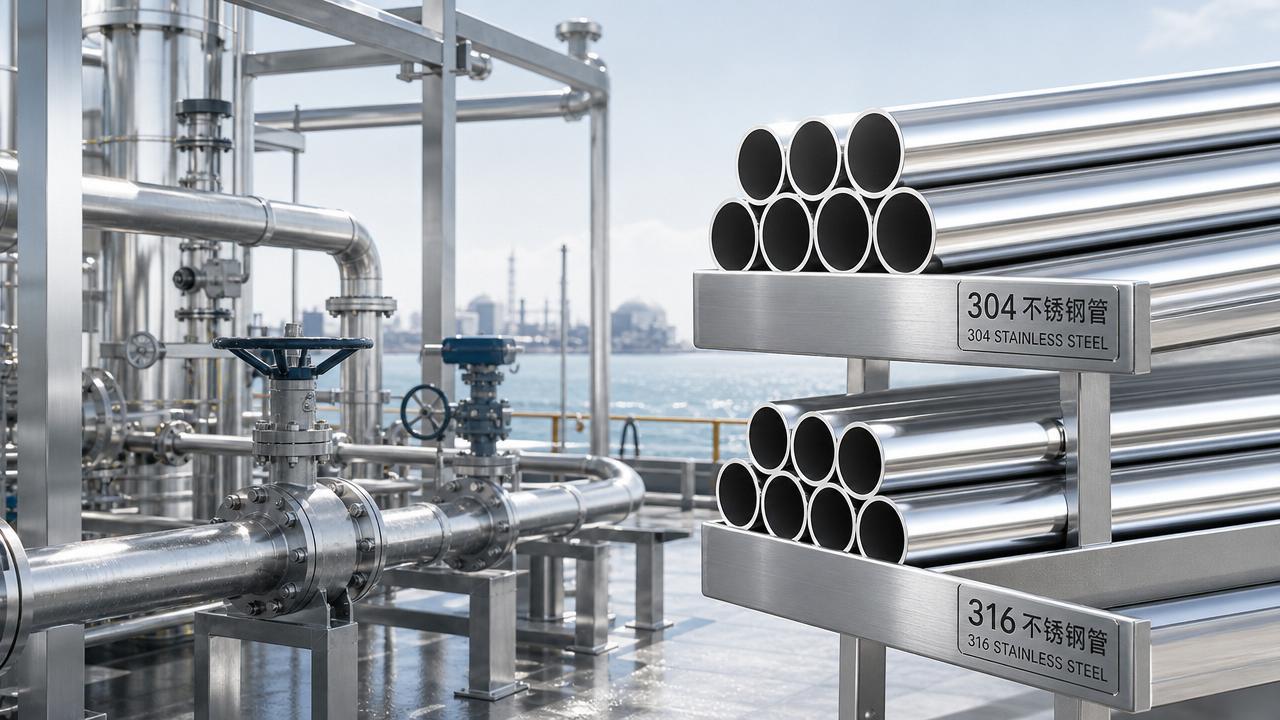
Selecting the right stainless steel pipe is a practical engineering decision that affects corrosion resistance, service life, maintenance cost, and project safety. For technical evaluators comparing 304 and 316 grades, the key differences lie in chemical composition, chloride resistance, operating environment, and total lifecycle value. This article explains how 304 and 316 stainless steel pipes perform in real applications, helping procurement and engineering teams make a more reliable material choice for industrial, construction, and fluid transport projects.
Why 304 and 316 Stainless Steel Pipe Are Compared So Often
In many steel projects, 304 and 316 are the first two grades placed on the evaluation sheet. Both are austenitic stainless steels, both offer good formability, and both are widely available in welded and seamless pipe forms.
The real question is not which stainless steel pipe is universally better. The better question is which grade matches the corrosion load, pressure condition, cleaning method, budget limit, and delivery schedule of the project.
- 304 is often selected for general industrial piping, architectural structures, water systems, and indoor equipment where chloride exposure is limited.
- 316 is usually preferred when the stainless steel pipe will face marine atmosphere, chemical media, brine, deicing salt, or frequent aggressive cleaning.
- Technical evaluators should compare the operating environment before comparing unit price, because corrosion failure can erase initial savings quickly.
For Liaocheng Jinchang Xincheng Trading Co., Ltd., this decision process is familiar. As a professional steel trading company serving global customers, we support buyers who need practical grade comparison, stable supply, and export-ready material coordination.
Chemical Composition: The Technical Difference Behind Field Performance
A stainless steel pipe does not resist corrosion because of appearance. Its performance comes from alloy chemistry, especially chromium, nickel, and molybdenum. The molybdenum content in 316 is the key reason it performs better in chloride-rich environments.
The following table gives a practical comparison for technical evaluation. Actual values should be verified against the requested standard, mill test certificate, and project specification.
This comparison shows why a stainless steel pipe grade cannot be selected by appearance or name alone. Small alloy differences can create major differences in service life when chloride, temperature, and stagnant zones are present.
Where 304 Stainless Steel Pipe Is Usually the Practical Choice
304 remains a widely used grade because it balances corrosion resistance, processing performance, availability, and cost. For many non-marine and low-chloride applications, it provides dependable service without unnecessary alloy expenditure.
Typical 304 Application Scenarios
- Indoor water transfer lines where chloride levels are controlled and regular inspection is possible.
- Food-related utility piping, provided the cleaning chemicals and temperatures are compatible with 304.
- Decorative and structural pipe in buildings, handrails, supports, and non-aggressive architectural environments.
- General fabrication projects requiring a stainless steel pipe with good weldability and common size availability.
Technical evaluators often choose 304 when the medium is not aggressive, the operating area is dry or controlled, and the project needs a predictable balance between price and performance.
However, 304 should not be treated as a default answer for every stainless steel pipe system. If chloride concentration rises, water stagnates, or cleaning agents contain strong halides, the corrosion risk increases.
When 316 Stainless Steel Pipe Becomes the Safer Specification
316 is selected when the cost of corrosion is higher than the premium paid for alloy content. The grade is especially relevant for piping exposed to salt, chemicals, or outdoor environments where contaminants accumulate.
High-Risk Conditions That Favor 316
- Marine atmosphere, port facilities, coastal construction, and offshore-related support systems.
- Chemical transfer lines involving mild acids, salts, or process solutions that may cause pitting in 304.
- Industrial washing systems where chloride-based detergents or disinfectants may contact the pipe surface.
- Outdoor piping in cold regions where deicing salts can deposit on exposed metal surfaces.
For buyers serving demanding export projects, 316 stainless steel pipe can reduce disputes related to premature staining, pitting, or unexpected maintenance. It is not always required, but it is often justified where the environment is difficult to control.
Application-Based Selection Table for Technical Evaluators
The fastest way to compare 304 and 316 is to map the stainless steel pipe grade to the actual working condition. The table below supports early-stage screening before final design confirmation.
This table is not a substitute for engineering approval, but it helps procurement teams avoid a common mistake: selecting a stainless steel pipe only from the price column without considering exposure conditions.
Performance Factors Beyond Grade Name
A technically correct stainless steel pipe purchase requires more than choosing 304 or 316. Pipe manufacturing method, dimensional tolerance, weld quality, heat treatment, and surface finish can all affect final performance.
Key Parameters to Confirm Before Ordering
- Confirm whether the project requires seamless pipe, welded pipe, precision pipe, or decorative pipe, because each type serves different pressure and appearance needs.
- Specify outside diameter, wall thickness, length tolerance, and end treatment to avoid installation mismatch at the jobsite.
- Check whether ASTM, EN, JIS, GB, or other recognized standards are required by the contract or destination market.
- Clarify whether mill test certificates, chemical composition records, mechanical properties, or third-party inspection support are needed.
For technical evaluators, this parameter discipline is essential. A correct grade with incorrect wall thickness or incomplete documentation may still fail procurement acceptance.
Cost Comparison: Unit Price Is Only One Part of the Decision
316 stainless steel pipe generally costs more than 304 because of alloying elements, especially molybdenum and nickel market influence. Yet a lower initial price does not always mean lower project cost.
The following comparison helps technical and procurement teams discuss lifecycle value using practical cost drivers instead of only comparing price per ton.
A rational stainless steel pipe decision uses total cost thinking. If failure would stop production, damage surrounding equipment, or delay a construction schedule, corrosion margin can be worth the additional material cost.
Standards, Documentation, and Compliance Checks
Technical evaluators should align the stainless steel pipe order with recognized standards and contract requirements. Common references may include ASTM specifications, EN standards, JIS requirements, or national standards used in the project location.
Documents Commonly Requested by Buyers
- Material test certificate showing chemical composition and mechanical properties according to the agreed specification.
- Dimensional inspection records for outside diameter, wall thickness, length, and visual surface condition.
- Packing details, marking information, and shipment documents needed for customs clearance and warehouse receiving.
- Additional inspection arrangements when the project requires third-party verification before dispatch.
Liaocheng Jinchang Xincheng Trading Co., Ltd. understands that export buyers, especially those serving markets such as Russia and other international regions, often need clear documentation and stable communication before shipment.
Common Misconceptions When Evaluating Stainless Steel Pipe
Many purchasing problems begin with simplified assumptions. Stainless steel is corrosion resistant, but it is not corrosion proof. Correct grade selection, fabrication quality, and operating control still matter.
Misconception 1: 304 and 316 Look Similar, So They Perform the Same
The surface appearance may be similar, but the alloy system is different. In chloride environments, 316 stainless steel pipe usually has a stronger resistance margin than 304.
Misconception 2: Thicker Wall Always Solves Corrosion Problems
Wall thickness helps pressure capacity and wear allowance, but localized pitting can still penetrate stainless steel pipe if the grade is unsuitable for the medium.
Misconception 3: The Lowest Quotation Is the Best Procurement Result
A low price may be attractive, but missing certification, wrong tolerance, poor packing, or delayed delivery can create higher project costs than the initial saving.
FAQ for 304 vs 316 Stainless Steel Pipe Selection
How do I know whether 304 is enough for my project?
304 may be enough if the stainless steel pipe operates indoors, carries low-chloride water or non-aggressive fluids, and can be inspected regularly. Confirm medium chemistry, temperature, and cleaning method first.
Is 316 always necessary for outdoor piping?
Not always. Outdoor dry environments may still use 304 successfully. However, coastal air, industrial pollution, salt deposits, or deicing chemicals make 316 a stronger choice.
What information should I provide for an accurate quotation?
Provide grade, standard, outside diameter, wall thickness, length, quantity, pipe type, surface requirement, destination, certificate needs, and expected delivery time. Application details help avoid wrong material selection.
Can stainless steel pipe be supplied with customized requirements?
Many requirements can be discussed, including size range, cutting length, packing method, documentation, and inspection support. Feasibility depends on stock status, mill schedule, and order quantity.
Why Choose Us for Stainless Steel Pipe Procurement
Liaocheng Jinchang Xincheng Trading Co., Ltd. specializes in supplying carbon steel and stainless steel products to global customers. Our role is not only to quote material, but also to help buyers reduce selection uncertainty.
- We support parameter confirmation for stainless steel pipe, including grade, standard, size, wall thickness, quantity, and end-use environment.
- We help compare 304 and 316 options based on corrosion conditions, delivery urgency, documentation requirements, and budget constraints.
- We coordinate stable supply chain resources for domestic and international orders, with experience in key export markets including Russia.
- We can discuss quotation details, packing requirements, delivery cycle, sample support, and certification expectations before order confirmation.
If you are evaluating 304 vs 316 stainless steel pipe for an industrial, construction, or fluid transport project, contact our team with your technical parameters. We can help review the specification, clarify grade suitability, and provide a practical supply proposal for your procurement decision.
Leave A Message
If you are interested in our products and want to know more details, please leave a message here, we will reply you as soon as we can.